BUSINESS CONNECTIONS EXPERT
Most keynote speakers use a prop the way a magician uses a rabbit — pull it out, get a reaction, move on. One trick. One moment. Then it’s gone, and so is the lesson.
Bryan doesn’t do one-and-done.
Every keynote is built around a progression of visual teaching tools — each one introduced at the exact moment your audience needs it, each one tied to a specific phase of the 1st 5 Minutes Framework. It’s not a gimmick. It’s a system. And it’s the reason people are still talking about the content weeks — even months — after the event ends.
Information fades. Experiences don’t.
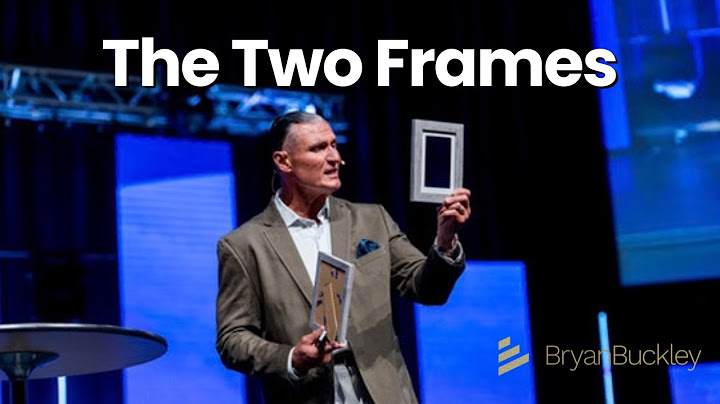
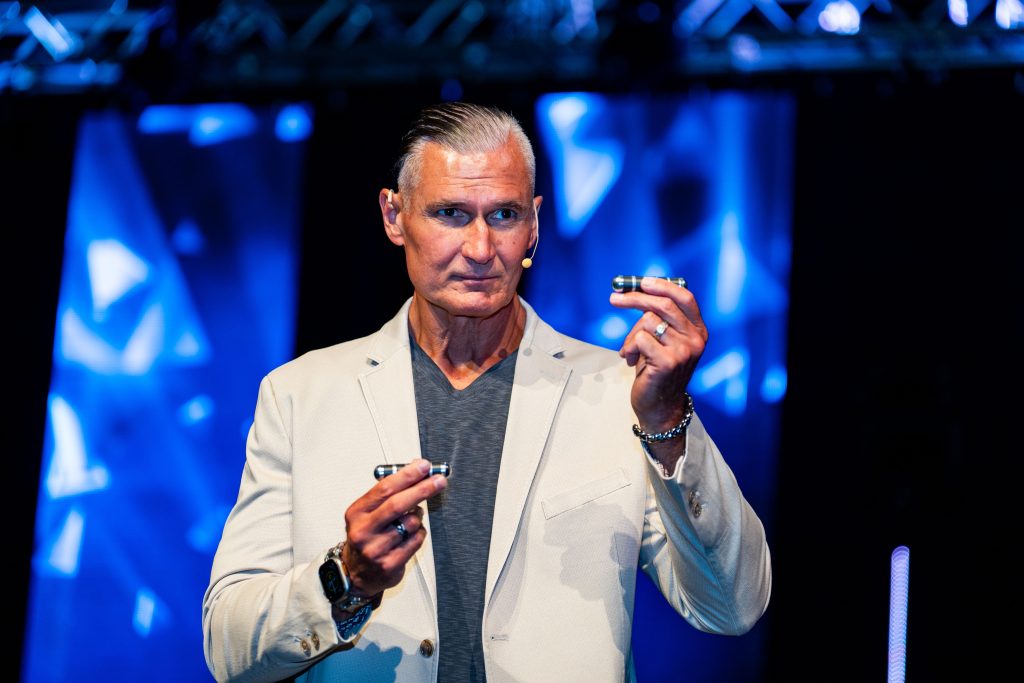
When Bryan hands someone a carabiner, flips an hourglass, or drops a set of noise-canceling headphones on the stage, he’s not performing — he’s anchoring a principle to something your team can see, touch, and picture long after the slides are forgotten. This is intentional instructional design, rooted in how adults actually retain information: not by being told, but by experiencing.
The result? Your team doesn’t walk out with notes they’ll never open again. They walk out with a mental image — a carabiner, an hourglass, a pair of headphones — that pulls the lesson back into their head the next time they’re in a real conversation that matters.
As Bryan moves the audience through each phase of the 1st 5 Minutes Framework, a new visual tool is introduced to lock in that phase’s core principle. By the end of the keynote, your audience hasn’t just heard four or five ideas in isolation — they’ve experienced a complete, connected framework, with each physical object serving as a memory trigger for a distinct step.
A laugh fades in a minute. A “wow” moment fades by the parking lot. But a physical object tied to a clear principle? That sticks.
Meeting planners and L&D leaders don’t just want an audience that enjoyed the keynote — they want an audience that can still articulate what they learned when it’s time to apply it. Bryan’s Visual Learning Experiences are engineered for exactly that: a keynote your team can reference, recall, and put into practice long after the applause ends.
This isn’t a speaker who uses a prop for effect. This is a speaker who uses multiple, sequenced, deliberately-designed visual tools to teach a complete framework in a way your audience will actually remember — and use.